

 CN
CN
Cefuroxime Sodium for Injection
Instructions for Cefuroxime Sodium for Injection
Please read the instructions carefully and use under the guidance of a physician or pharmacist.
[Name of the drug]
Generic name: Cefuroxime Sodium for Injection
Product name: Cefuroxime Sodium for Injection
Hanyu Pinyin: Zhusheyong Toubaofuxinna
[Ingredients]
The main ingredient of this product is cefuroxime sodium.
Chemical name: (6 R R,7 R )-7-[2-(furan-2-yl)-2-(methoxyimino)acetylamino]-3-carbamateoxymethyl-8-oxo-5-thio-1-azabiabicycl[4.2.0]octane-2-en-2-carbamate
sodium salt.
Chemical structural formula:
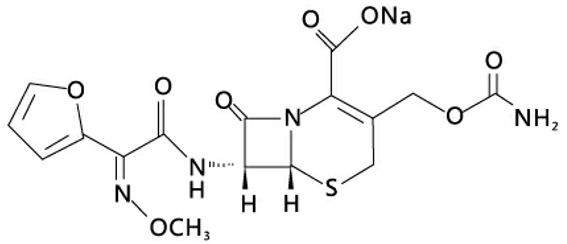
Molecular formula:C 16 H 15 N 4 NaO 8 S
Molecular weight: 446.37
�Properties】 This product is white or white-like powder.
[Indications]
This product is suitable for the treatment of infections caused by
specific microbial-sensitive strains in the following diseases:
1. Respiratory infections: caused by Streptococcus pneumoniae,
Haemophilus influenzae (including ampicillin-resistant strains),
Klebsiella spp., methicillin-sensitive Staphylococcus aureus
(penicillinase-producing and non-penicillinase-producing strains),
Streptococcus pyogenes, and Escherichia coli. For example: acute and
chronic bronchitis, infectious bronchiectasis, bacterial pneumonia, lung
cysts, and chest infections after surgery.
2. Ear, nose and throat infections: caused by Streptococcus pneumoniae,
Haemophilus influenzae (including β-lactamase strains), Moraxella
catarrhalis (including β-lactamase strains), and Streptococcus pyogenes
sensitive strains. For example: sinusitis, tonsillitis, pharyngitis and
otitis media.
3. Urinary tract infections: caused by bacteria of the genus Escherichia
coli and Klebsiella. For example: acute and chronic pyelonephritis,
cystitis, and asymptomatic bacteriuria.
4. Skin and soft tissue infections: Caused by methicillin-sensitive
Staphylococcus aureus (penicillinase and non-penicillinase strains),
Streptococcus pyogenes, Escherichia coli, Klebsiella spp., and
Enterobacteriaceae bacteria. For example: cellulitis, erysipelas,
peritonitis and wound infection.
5. Sepsis: Caused by methicillin-sensitive Staphylococcus aureus
(penicillinase-producing and non-penicillinase-producing strains),
Streptococcus pneumoniae, Escherichia coli, Haemophilus influenzae
(ampicillin-resistant strains), and bacteria of the genus Klebsiella.
6. Meningitis: Caused by Streptococcus pneumoniae, Haemophilus
influenzae (ampicillin-resistant strains), Neisseria meningitidis, and
methicillin-sensitive Staphylococcus aureus (penicillinase-producing and
non-penicillinase-producing strains).
7. Gonorrhea: Non-comorbid and disseminated gonococcal infections in men
and women caused by Neisseria gonorrhoeae (penicillinase-producing and
non-penicillinase-producing strains), especially those who are not
suitable for penicillin treatment.
8. Bone and joint infections: Caused by Staphylococcus aureus
(penicillinase-producing and non-penicillinase-producing strains). For
example: osteomyelitis and septic arthritis.
9. Puerperal and gynecologic infections: Caused by Neisseria gonorrhoeae
(penicillinase and non-penicillinase strains), Staphylococcus aureus
(penicillinase and non-penicillinase strains), Bacteroides (excluding
Bacteroides fragilis), Escherichia coli, and Klebsiella spp. For
example: pelvic inflammatory disease, etc.
In clinical microbiology studies of skin and soft tissue infections,
sensitive strains of aerobic and anaerobic microorganisms are often
observed to grow together. This product is effective in treating these
mixed infections with several isolated microorganisms.
This product can be used in combination with aminoglycosides for some
confirmed or suspected cases of gram-positive or gram-negative sepsis,
as well as other serious infections in which the causative organism has
not been identified (see [Precautions]). The recommended dose of these
two antibiotics can be determined according to the severity of the
infection and the patient's own condition.
To reduce the development of resistant bacteria and to maintain the
effectiveness of this and other antimicrobials, this product should only
be used to treat or prevent infections caused by confirmed or highly
suspected sensitive bacteria. Existing information on culture and
sensitivity should be considered when selecting or adjusting
antimicrobial therapy. If such data are not available, appropriate
treatment can be empirically selected based on local epidemiology and
sensitivity characteristics.
Prevention
Preoperative prophylactic use of Cefuroxime Sodium for Injection
prevents the growth of sensitive pathogenic bacteria, thereby reducing
the incidence of certain postoperative infections after surgical
treatment with clean, contaminated or potentially contaminated (eg,
vaginal hysterectomy). The effectiveness of intraoperative prophylactic
use of antimicrobials depends on the time of administration. This
product should generally be administered 0.5-1 hour before surgery so
that the effective antibiotic concentration can be reached in the trauma
tissue during surgery. If the operation is longer, it should be
repeated intraoperatively.
Prophylactic medication is generally not required after surgery and
should be stopped within 24 hours. In most surgeries, continued
prophylactic use of antimicrobials does not reduce the incidence of
subsequent infections, but rather increases the likelihood of adverse
reactions and the development of bacterial resistance.
For patients undergoing open heart surgery, infection at the surgical
site is a serious risk and is effective for perioperative use. It is
recommended that such patients continue to use this product for at least
48 hours after the end of surgery. If infection is present, samples
should be taken for culture to identify the causative organism and
administer appropriate antimicrobial therapy.
�Specifications】 According to C 16 H 16 N 4 O 8 S
(1)0.5g;(2)0.75g;(3)1.5g
[Usage and dosage]
It can be injected deep intramuscularly, intravenously, or
intravenously. Before intramuscular injection, there must be no blood
withdrawn before injection.
Intramuscular injection: When administering, dissolve in 1.0mL sterile
injection water per 0.25g, shake slowly to obtain a suspension, and then
deep intramuscular injection.
Intravenous injection: 0.25g dissolved in at least 2.0mL sterile
injection water, 0.75g dissolved in at least 6.0mL sterile injection
water, 1.5g dissolved in at least 12.0mL sterile injection water, shaken
well and then slowly injected intravenously, or added to intravenous
infusion tube for drip.
General recommended dosage
Adults:
Most infections can be treated by intramuscular injection or intravenous
injection of this product, 750mg each time, 3 times a day; For more
severe infections, the dose should be increased to 1.5 g three times
daily intravenously, or if needed, the interval between intramuscular or
intravenous injections can be increased every 6 hours, for a total
daily dose of 3 g to 6 g.
Infants and children:
The daily dose is 30~100mg/kg according to body weight, divided into 3
or 4 doses. For most infections, a daily dose of 60 mg/kg body weight is
appropriate.
Newborn:
The dose is 30 to 100 mg/kg body weight/day in two or three doses.
Newborns who are a few weeks old have a half-life of cefuroxime in their
serum that can be three to five times higher than that of adults.
Older adults:
See dosage for adults.
Other recommended doses
Gonorrhea: A single dose of 1.5g should be given. This can be divided
into 2×750 mg doses and injected intramuscularly to different areas,
such as the sides of the buttocks.
Meningitis: This product is suitable for the treatment of bacterial
meningitis caused by sensitive bacteria alone. The following dosages are
recommended:
Infants and children:
200~240mg/kg per day according to body weight, divided into 3~4 times,
intravenously, after 3 days of treatment, if clinical symptoms improve,
the dose can be reduced to 100mg/kg per day according to body weight.
Newborn:
Intravenous: The starting dose is 100 mg/kg per day for body weight.
According to clinical needs, the dose can be reduced to 50mg/kg per day according to body weight.
Adults:
3g of this product is administered intravenously every 8 hours. There is
insufficient data to recommend dosage for intrathecal injections.
Preventive treatment
The general dose is 1.5g intravenously, which is used for abdominal,
pelvic and orthopedic surgery with the introduction of anesthetic, and
the additional dose is 750mg intramuscularly injected twice at 8 hours
and 16 hours after surgery. In heart, lung, esophageal and vascular
surgery, with the introduction of anesthetic, 1.5g of this product is
generally injected intravenously, and then 750mg of this product is
continued intramuscularly within the next 24 to 48 hours, three times a
day. In total joint replacement surgery, 1.5 g of cefuroxime powder can
be dry mixed with a bag of methyl isobutyrate cement powder before
adding liquid monomer.
Dosage in case of renal impairment :
Cefuroxime is excreted through the kidneys, so it is the same as the
disposal method of similar antibiotics, and for patients with impaired
renal function, it is recommended to reduce the dosage of this product
accordingly to compensate for the slower excretion. However, dose
reduction should only be done if creatinine clearance drops to 20 ml/min
or less. For adults with significant renal impairment (creatinine
clearance 10-20ml/min), the recommended dose is 750mg twice daily. For
patients with severe renal impairment (creatinine clearance rate is less
than 10ml/min), the appropriate dosage is 750mg once a day. See the
table below, children with renal insufficiency should also refer to the
table below for adjustment.
| Creatinine clearance (ml/min). | Dosage | Interval |
| >20 10~20 <10 |
0.75~1.5g 0.75g 0.75g |
Every 8 hours Every 12 hours Every 24 hours |
For patients undergoing
dialysis, 750mg of this product is given at the end of each dialysis.
For continuous peritoneal dialysis, the appropriate dose is 750 mg twice
daily. For patients with renal failure undergoing continuous
arteriovenous hemodialysis or high-flow hemodialysis in the intensive
care unit, the appropriate dose is 750 mg twice daily. For patients with
low-flow hemodialysis, see "Dosage in case of renal impairment" for
dosing.
Compatibility taboos
It is compatible with most commonly used intravenous solvents and electrolytic solutions.
The pH value of Sodium Bicarbonate Injection (2.74% W/V) will
significantly affect the color of the solution, so it is not recommended
to use this injection as a dilution of this product. However, if
needed, if the patient is being treated with intravenous sodium
bicarbonate, this solution can be introduced directly into the delivery
system tube.
This product should not be mixed with aminoglycoside antibiotics in the syringe.
[Adverse reaction]
Adverse drug reactions are very rare (<1/10000), and most of them are mild and transient.
Since most adverse reactions are not applicable to calculating the
frequency of occurrence, the following classifications of adverse
reactions are estimated. In addition, the frequency of adverse reactions
related to this product may vary depending on the indication.
Data to determine the frequency of adverse effects ranging from very
common to rare are from large-scale clinical studies. For the frequency
of other adverse events (i.e., adverse reactions with a frequency <
1/10000, etc.), post-marketing surveillance data are mainly used and
usually refer to the reporting rate rather than the actual frequency of
occurrence.
The frequency of adverse reactions is defined as:
Very common ≥ 1/10
Common ≥ 1/100 and < 1/10
Uncommon ≥ 1/1000 and < 1/100
Rare ≥1/10000 and <1/1000
Very rare <1/10000
Infections and invasive diseases
Rare: Candida overgrowth
Diseases of the blood and lymphatic system
Common: neutropenia, eosinophilia
Uncommon: leukopenia, decreased hemoglobin concentration, positive Coomb's test
Rare: thrombocytopenia
Very rare: hemolytic anemia. Cephalosporins are easily absorbed to the
surface of the red blood cell membrane and interact with antibodies
against these drugs, resulting in a positive Coomb's test (which can
interfere with cross-matching) and, very rarely, hemolytic anemia.
Post-marketing surveillance found that this product still has case
reports of pancytopenia, decreased hematocrit, prolonged prothrombin
time, and bleeding.
Immune system disorders
Allergic reactions include:
Uncommon: rash, hives, itching
Rare: drug fever
Very rare: interstitial nephritis, anaphylaxis, cutaneous vasculitis.
Post-marketing surveillance found that this product also has case
reports of angioedema, serum disease-like syndrome (urticaria
accompanied by arthritis, arthralgia, myalgia and fever, etc.), severe
anaphylaxis, anaphylactic reactions, anaphylactic shock.
See other skin and subcutaneous tissue diseases and kidney and urinary system diseases.
Diseases of the gastrointestinal system
Uncommon: Gastrointestinal disturbances, including diarrhea and nausea
Very rare: pseudomembranous colitis.
Post-marketing monitoring found that this product still has case reports
of abdominal distension, abdominal pain, and heartburn.
Diseases of the hepatobiliary system
Common: Transient increased liver enzyme levels
Very rare: transient bilirubin levels are elevated
Although transient increases in serum liver enzyme levels or bilirubin
levels occur especially in patients with liver disease, there is no
evidence of liver damage.
Skin and subcutaneous tissue diseases
Very rare: erythema multiforme, toxic epidermal necrolysis, Stevens-Johnson syndrome
See Immune System Disorders.
Kidney and urinary system diseases
Very rare: elevated serum sarcatinine, elevated blood urea nitrogen, and decreased creatinine clearance.
See Immune System Disorders.
Post-marketing surveillance found that there were still case reports of
hematuria, interstitial nephritis, and acute kidney injury (including
acute renal failure).
Various neurological diseases
Post-marketing monitoring found that this product still has case reports
of dizziness, headache, convulsions, syncope, drowsiness, local
numbness, and individual reports of seizures.
Systemic disease and various reactions at the site of administration
Common: Injection site reactions may include pain and thrombophlebitis
Pain at the site of intramuscular injection, especially at larger doses, but there is no need to stop treatment.
Post-marketing monitoring found that this product still has case reports of fever, chills, fatigue, edema, and local swelling.
Other
Post-marketing monitoring found that this product also has case reports
of skin flushing, tinnitus, hearing loss, conjunctivitis, palpitations,
chest tightness, tachycardia, dyspnea, abnormal blood pressure,
irritability, abnormal appetite, disulfiram-like reactions, and
laryngeal edema.
�Contraindications】 This product is prohibited for those who are allergic to cephalosporins.
[Precautions]
Although cross-reactivity has been reported, cephalosporin antibiotics
are generally safe for use in patients who are allergic to penicillin.
However, special attention should be paid to patients with a history of
penicillin or β-lactamase allergy.
Although the results of biochemical experiments related to renal
function will change, they are not clinically significant. However, for
patients with impaired renal function, their renal function should be
monitored as a preventive measure.
Particular care should be taken when high-dose cephalosporin antibiotics
are given in patients treated with a combination of strong diuretics
such as furanoaniline or aminoglycoside antibiotics, as renal impairment
has been reported with concomitant therapy. Renal function should be
monitored in these patients, older patients, and patients with
pre-existing renal impairment (see Dosage).
As with other therapies, cefuroxime has been reported to have mild to
moderate hearing loss in a small number of children when used to treat
meningitis. Positive for Haemophilus influenzae in cerebrospinal fluid
cultures for 18-36 hours was also noted after treatment with cefuroxime
sodium injection, as well as other antibiotics, but the clinical
significance of this was unknown.
As with other antibiotics, the use of this product can cause overgrowth
of Candida and long-term use can cause overgrowth of other non-sensitive
bacteria such as Enterococcus and Clostridium difficile, in which case
treatment needs to be interrupted.
Pseudomembranous colitis has been reported with antibiotics, ranging in
severity from mild to life-threatening. Therefore, it is serious that
the above diagnosis should be taken into account in patients who develop
diarrhea during or after the use of antibiotics. If the patient has
prolonged or severe diarrhea or abdominal cramps, treatment should be
stopped immediately and the patient should be further examined.
Compatibility and stability
This product should not be administered in the same container as
aminoglycoside antibiotics; Precipitation occurs when mixed with
vancomycin.
Intramuscular injection: Prepare a suspension with sterile injection
water, which should be used immediately, such as at room temperature for
no more than 2 hours, if stored in the refrigerator at 5 °C, it should
not exceed 24 hours.
Intravenous bolus: Prepared with sterile injection water to make a
solution, it should be used immediately, if left at room temperature for
no more than 2 hours, if stored in the refrigerator at 5 °C, it should
not exceed 24 hours.
Intravenous infusion: Prepared with sterile water for injection to make a
solution, it should be used immediately, if it is placed at room
temperature for no more than 3 hours, if stored in the refrigerator at 5
°C, it should not exceed 24 hours.
Impact on driving and operating machinery
The effects of its use on driving and operating machinery have not been
studied. However, combined with the known adverse reactions of
cefuroxime sodium, the use of this product is unlikely to affect driving
and operating machinery.
[Medication for pregnant and lactating women]
There is no experimental evidence that cefuroxime may cause embryonic
pathogenicity or fetal malformations. But like all medications, it
should be used with caution in the first trimester.
Cefuroxime can be secreted through milk and should be used with caution in lactating women.
[Children's medication]
See [Usage and Dosage].
[Medication for the elderly]
See [Usage and Dosage].
[Drug Interactions]
1. It has been reported that the combination of aminoglycoside antibiotics and cephalosporins can cause nephrotoxicity.
2. Clinical use of cephalosporin Patients will have false positives when
checking urine glucose with the Spot or Fischeri or Clintest Tablets
test, but there will be no false positives when tested with enzymes. If a
false negative result can be obtained by the ferrocyanic acid method
during blood glucose checking, cefuroxime sodium will not interfere with
the determination of urine and blood creatinine values by the alkaline
picric acid method.
3. Cefuroxime is compatible with the following drugs and
contraindications: amikacin sulfate, gentamicin, kanamycin, tobramycin,
neomycin, chlortetracycline hydrochloride, oxytetracycline
hydrochloride, oxytetracycline hydrochloride, colistin sodium mesylate
sulfate, polymyxin sulfate B, erythromycin gluconate, erythromycin
lacconate, lincomycin, sulfazo, aminophylline, soluble barbiturates,
calcium chloride, calcium gluconate, diphenhydramine hydrochloride and
other antihistamines, lidocaine, norepinephrine, m-hydroxylamine,
methylphenidate, succincholine, etc. Occasionally, it may be
contraindicated with the following drugs: penicillin, methicillin,
hydrocortisone sodium succinate, phenytoin, prochlorperazine, B vitamins
and vitamin C, hydrolyzed proteins.
4. Strong diuretics such as furosemide, itaninic acid, and bumetanide,
antitumor drugs such as kanibiccil and strepzocin, as well as
aminoglycoside antibiotics combined with cefuroxime may increase
nephrotoxicity.
5. Rodic acid can enhance the antibacterial activity of cefuroxime
against certain gram-negative bacilli that are resistant to lactamase
production.
6. Like other antibiotics, this product may affect the intestinal flora,
resulting in reduced estrogen reabsorption and reduced efficacy of
concomitant oral contraceptives.
[Drug overdose]
Taking too many doses of cephalosporins can cause brain irritation and
convulsions. Hemodialysis or peritoneal dialysis reduces serum
concentrations of cefuroxime.
[Pharmacology and Toxicology]
Pharmacological effects
Cefuroxime is a bactericidal cephalosporin antibiotic that resists most
β-lactamases and is effective against a wide range of Gram-positive and
Gram-negative bacteria.
The incidence of acquired resistance depends on geographic location,
time, and selected genus, and can be at high levels. It is necessary to
obtain local information on drug resistance, especially when treating
severe infections.
Microbial susceptibility to cefuroxime in vitro
If the clinical effectiveness of cefuroxime is demonstrated in clinical trials, it is marked with an asterisk (*).
Common sensitive strains
Aerobic gram-positive bacteria :
Staphylococcus aureus (methicillin sensitive)*
Coagulase-negative staphylococci (methicillin-sensitive).
Streptococcus pyogenes*
β-Hemolytic Streptococcus
Aerobic gram-negative bacteria :
Haemophilus influenzae, including ampicillin-resistant strains*
Haemophilus parainfluenzae*
Moraxella catarranger*
Neisseria gonorrhoeae*, including both penicillinase-producing and non-penicillinase strains
Neisseria meningitidida
Shigella genus
Anaerobic Gram-positive bacteria :
Digestive Streptococcus
Propionibacterium
Spirochetes :
Borrelia burgdorferi*
Bacteria with acquired drug resistance problems
Aerobic gram-positive bacteria :
Streptococcus pneumoniae*
Streptococcus grass greener
Aerobic gram-negative bacteria :
Pertussis bordetella
Citrate spp. does not include Citrate fraudi
Enterobacteriaceae spp., excluding aerogenic Enterobacteriaceae and Enterobacteriaceae cloacae
Escherichia coli*
Klebsiella spp., including Klebsiella pneumoniae*
Proteus miraculous
Proteus spp. excludes Proteus panerii and Proteus vulgaris
Providence fungi
Salmonella spp
Anaerobic Gram-positive bacteria :
Fusobacterium spp. excludes Clostridium difficile
Anaerobic gram-negative bacteria :
Bacteroides spp. does not include Bacteroides fragilis
Clostridium spp
Inherently resistant bacteria
Aerobic gram-positive bacteria :
Enterococcus genera, including Enterococcus faecalis and Enterococcus faecalis
Listeria monocytogenes
Aerobic gram-negative bacteria :
Acinetobacter spp
Onion Burkholder fungus
Campylobacter genus
Citrate bacillus fraudi
Enterobacteria aerogeniens
Enterobacteriaceae claugua
Morgan Morgan
Proteus panerii
Proteus vulgaris
Pseudomonas spp. spp
Serratia marcescens
Maltophilic narrow-eating monas
Anaerobic Gram-positive bacteria :
Clostridium difficile
Anaerobic gram-negative bacteria :
Bacteroides fragile
Other :
Chlamydia
Mycoplasma genus
Legionella spp
Toxicology Research
Genotoxicity: Although no lifelong studies in animals have been
conducted to evaluate the potential carcinogenicity of cefuroxime, no
mutagenic effects have been found in micronucleus and bacterial tests.
Reproductive toxicity: Rats were given cefuroxime at a dose of
1000mg/kg/day, and there was no significant effect on animal fertility.
Mice and rats were given cefuroxime at a dose of 3200mg/kg/day, and no
damage to fetal development was observed. However, the animal-human
correlation is not supported by clinical studies.
[Pharmacokinetics]
According to the Physicians' Desk Reference, the average peak blood
concentration of cefuroxime at a dose of 0.75g of this product was
27μg/ml and the peak time was 45 minutes (ranging from 15~60 minutes).
After intravenous injection of 0.75g and 1.5g, the plasma concentration
reached about 50μg/ml and 100μg/ml at 15 minutes, respectively, and the
effective plasma concentration could be maintained for 5.3 hours and 8
hours or more or higher, respectively. After administering a dose of
1.5g to normal subjects intravenously every 8 hours, there was no
accumulation of cefuroxime in the blood. The half-life of intravenous or
intramuscular administration is approximately 80 minutes.
About 89% of the drugs are excreted by the kidneys within 8 hours after
administration, resulting in high urine drug concentrations.
After a single dose of 0.75g intramuscular cefuroxime was injected 8
hours, the urine drug concentration could reach an average of 1300
μg/ml. After a single dose of 0.75g and 1.5g intravenous cefuroxime for 8
hours, the urine drug concentration reached an average of 1150 μg/ml
and 2500 μg/ml.
If probenecid is taken orally at the same time, it can prolong the
tubular excretion time of cefuroxime, reduce renal clearance by about
40%, increase blood concentration by about 30%, and extend plasma
half-life by about 30%. Cefuroxime reaches therapeutic concentrations in
pleural fluid, joint fluid, bile, sputum, bone, and aqueous humor.
Studies have shown that cefuroxime can reach therapeutic concentrations
in the cerebrospinal fluid of adult and pediatric meningitis patients.
Cefuroxime can be measured in the cerebrospinal fluid of patients with
meningitis who have taken multiple medications.
The serum protein binding rate of cefuroxime is about 50%.
[Storage]
Store away from light and no more than 25°C.
[Packaging]
Medium borosilicate glass controlled injection bottle + sterile powder
for injection coated ethylene Teflon copolymer film chloride butyl
rubber stopper + aluminum plastic combination cap packaging for
antibiotic bottle. (1) 1 bottle per box (2) 10 bottles per box.
[Validity period]
24 months
[Implementation standards]
The National Medical Products Administration has YBH01072026 standards
[Approval number]
Sinopharm standard word H20065669 (0.5g).
Sinopharm quasi-word H20065670 (0.75g).
Sinopharm quasi-word H20065672 (1.5g).
[Drug marketing authorization holder]
Name: Guangdong Jincheng Jinsu Pharmaceutical Co., Ltd
Registered address: No. 10, Shennong Road, Torch Development Zone, Zhongshan City, Guangdong Province
[Manufacturer]
Company name: Guangdong Jincheng Jinsu Pharmaceutical Co., Ltd
Production address: No. 10 Shennong Road, Torch Development Zone, Zhongshan City, Guangdong Province
Postal code: 528437
Service hotline: 400-9988-970
Telephone number: (0760) 22830525 (switchboard).
Fax number: (0760) 22578279
Website: http://www.gdjcjs.com
-
Prev: None