

 CN
CN
Ceftizoxime Sodium for Injection
Instructions for Ceftizoxime Sodium for Injection
Please read the instructions carefully and use under the guidance of a physician
[Name of the drug]
Generic name: Ceftizoxime Sodium for Injection
Product name: Ceftizoxime Sodium for Injection
Hanyu Pinyin: Zhusheyong Toubaozuowona
[Ingredients]
The active ingredient of this product is cefazoloxime sodium.
Chemical name: (6 R R,7 R )-7-[2-(2-aminothiazol-4-yl)-2-(methoxyimino)acetylamino]-8-oxo-5-thio-1-azabicyclic
[4.2.0]octane-2-en-2-carboxylate sodium salt
Chemical structural formula:
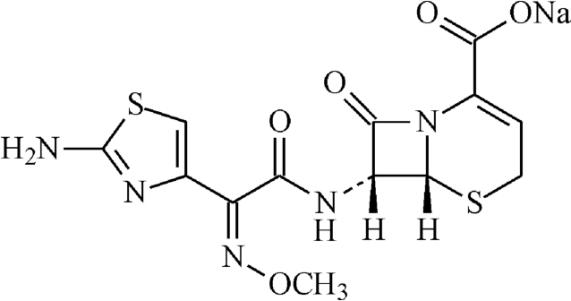
Molecular formula:C 13 H 12 N 5 NaO 5 S 2
Molecular weight: 405.38
Excipients: There are no excipients in the prescription of this product.
[Characteristics]
This product is a white to yellowish crystalline, crystalline or granular powder.
[Indications]
Lower respiratory tract infections, urinary tract infections, abdominal
infections, pelvic infections, sepsis, skin and soft tissue infections,
bone and joint infections, meningitis caused by Streptococcus pneumoniae
or Haemophilus influenzae, and simple gonorrhea caused by bacteria.
[Specifications]
As C 1: p.m. 13 N 5 O 5 S 2 计(1)0.5g (2)1.0g (3)2.0g
[Usage and dosage]
1. Common dosage for adults: 1~2g at a time, once every 8~12 hours; The
dose for seriously infected patients can be increased to 3~4g once every
8 hours. When treating uncomplicated urinary tract infections, 0.5g
once every 12 hours.
2. Infants and children aged 6 months and above: 50mg/kg once every 6~8 hours according to body weight.
3. Patients with renal impairment: Patients with renal impairment need
to adjust the dose according to the degree of damage. After the first
loading dose of 0.5~1g, the usual dose for patients with mild renal
impairment (endogenous creatinine clearance Clcr is 50~79ml/min) is 0.5g
once every 8 hours, and for severe infection, the usual dose is 0.5g
once every 8 hours, and in patients with moderate renal impairment (Clcr
is 5~49ml/ minutes) The usual dose is 0.25~0.5g once every 12 hours,
0.5~1g once every 12 hours in case of severe infection; The usual dose
for patients with severe renal impairment (Clcr is 0~4ml/minute) is 0.5g
once every 48 hours, or 0.25g once every 24 hours, 0.5~1g once every 48
hours in severe infection, or 0.5g once every 48 hours, or 0.5g once
every 24 hours. Hemodialysis patients can not add additional doses after
dialysis, but they need to be administered at the end of dialysis
according to the above dosage and time.
This product can be dissolved in water for injection, sodium chloride
injection, 5% glucose injection and slowly injected intravenously, or it
can be added to 10% glucose injection, electrolyte injection or amino
acid injection for intravenous infusion for 30 minutes ~ 2 hours.
This product should be used as soon as possible after being prepared
into a solution, and the state of the solution should be observed before
use, and if there is visible particulate matter precipitation, it
should be discarded.
[Adverse reaction]
Cefazoxime sodium for injection is generally well tolerated. The most
common adverse reactions (greater than 1%, but less than 5%) are:
Rash, pruritus and allergic reactions such as drug fever, mild increase in alkaline phosphatase, serum aminotransferase.
Burning sensation at the injection site, cellulitis, phlebitis (in
intravenous injectors), pain, hardening and paresthesia, etc.
Less common adverse reactions (less than 1%) were:
Allergies – occasionally headache, numbness, vertigo, vitamin K and B deficiencies, anaphylactic shock.
Liver – Elevated bilirubin is rarely reported.
Renal – occasionally elevated urea nitrogen and creatinine are observed.
Hematologic-anemia, including occasionally fatal hemolytic anemia,
leukopenia, neutropenia, and thrombocytopenia are rarely reported.
Genitourinary system – vaginitis rarely occurs.
Very few patients can develop mucosal candidiasis.
Gastrointestinal – occasionally diarrhea, nausea, vomiting, loss of appetite have been reported.
Symptoms of pseudomembranous colitis may occur during or after antibiotic therapy (see precautions).
In addition to the adverse effects described above, the following
adverse reactions of cephalosporin antibiotics and changes in laboratory
tests have been reported in patients treated with cefazoloxime sodium:
Stevenson syndrome, erythema multiforme, toxic epidermal necrolysis,
syncope-like reactions, toxic nephropathy, aplastic anemia, bleeding,
prolonged prothrombin time, elevated lactate dehydrogenase,
pancytopenia, and agranulocytosis.
Several cephalosporins have been associated with seizure triggering,
especially in patients with impaired renal function, and the dose has
not been reduced. If seizures related to medication occur, the drug
should be discontinued. If clinically indicated, anticonvulsant therapy
may be considered.
[Contraindication]
1. It is prohibited for those who are allergic to this product and other cephalosporins.
2. Use with caution if you are allergic to penicillin.
3. Use with caution if you or your parents and siblings are prone to allergies such as bronchial asthma, rash, and hives.
4. Patients with severe renal impairment, patients with difficulty
eating, or non-oral nutrition, patients with low general status, and
elderly patients should use it with caution.
[Precautions]
1. Before using this product, the patient must be asked in detail if
there is a history of previous allergy to this product, other
cephalosporins, penicillins, or other drugs, as cross-allergic reactions
have been demonstrated between β lactam antibiotics such as penicillins
and cephalosporins. In patients with penicillin antibiotic allergy,
about 5%~10% can have cross-allergic reactions to cephalosporins.
Therefore, patients with a history of penicillin allergy must fully
weigh the pros and cons and use it with caution under close observation
when indicating the use of this product. If patients who have had
penicillin shock in the past, this product should not be used again. If
an allergic reaction occurs when using this product, the drug should be
stopped immediately. If anaphylactic shock occurs, emergency measures
such as adrenaline, airway patency, oxygen inhalation, glucocorticoids
and antihistamines are given immediately.
2. Interference with diagnosis: A positive antiglobulin (Coombs) test
can occur. Urine glucose test with Bendict, Fehling and Clinitest
reagents can be false positive. Serum alkaline phosphatase, blood urea
nitrogen, alanine aminotransferase, aspartate aminotransferase, or serum
lactate dehydrogenase values may be increased.
3. Almost all antibiotics can cause pseudomembranous colitis, including
cefazoloxime sodium. If antibiotic-associated enteritis occurs during
application, the drug must be stopped immediately and corresponding
measures must be taken. Mild cases of pseudomembranous colitis only need
to be stopped. For moderate to severe pseudomembranous colitis,
infusions and electrolyte and protein supplementation should be
considered and treated with clinically effective antimicrobials against
Clostridium difficile colitis.
4. People with a history of gastrointestinal diseases, especially
patients with colitis, should use it with caution. Use with caution for
those who are prone to bronchial asthma, rash, urticaria and other
allergic constitutions. Patients who cannot eat well or take nutrition
out of mouth, the elderly, and patients with cachexia should use it with
caution because of vitamin K deficiency. Antimicrobial therapy can
alter the normal flora of the colon and may lead to overgrowth of
Clostridium. Studies have shown that toxins produced by Clostridium
difficile are the main cause of antibiotic-associated colitis.
5. Although this product has not shown any effect on kidney function,
attention should still be paid to kidney function when using this
product, especially in those critically ill patients receiving high-dose
therapy.
6. Similar to other antibiotics, excessive use of this product may lead
to excessive reproduction of insensitive microorganisms, which requires
close observation and corresponding measures should be taken in case of
double infection.
7. A large dose of intravenous injection can cause vascular pain and
thrombophlebitis, and the injection speed should be slowed down as much
as possible to prevent their occurrence.
8. This product should not be placed at room temperature for more than 7
hours after dissolution, and should not be placed in the refrigerator
for more than 48 hours.
9. Cephalosporins may be associated with a decrease in prothrombin
activity and are dangerous in patients including renal or hepatic
impairment, or in patients with poor nutritional status, as well as in
patients on long-term antibiotic therapy and stable on prior
anticoagulation therapy. In these patients, prothrombin time should be
monitored and exogenous vitamin K should be given as directed.
10. Administration of Ceftizoxime Sodium for Injection in the absence
of a proven or highly suspected bacterial infection or prophylactic
indication is unlikely to provide a benefit to the patient and carries
the risk of increased bacterial resistance.
[Medication for pregnant and lactating women]
No damage to fertility and fetus has been found in animal experiments,
but the safety of the drug during pregnancy and childbirth is unknown,
and pregnant women should only use it when there are clear indications.
A small amount of this product can be secreted into milk, and
breastfeeding women should suspend breastfeeding when using this
product.
[Children's medication]
The safety and efficacy of this product for use in children under 6
months of age have not been established. Ceftizoxime Sodium for Injection is given to children 6 months of age and older with transient
eosinophils, aspartate aminotransferase, alanine aminotransferase, and
creatine phosphokinase levels are elevated. Elevated creatine
phosphokinase may be associated with intramuscular administration.
[Medication for the elderly]
Clinical studies of cefazoloxime sodium did not include a sufficient
number of subjects aged 65 years and older to determine if their
response was different from that of younger subjects. Other reported
clinical experiences have not found a difference in response between
older and younger patients. In general, the choice of dose should be
cautious in the elderly due to reduced liver, kidney, or heart function,
as well as concomitant diseases or other drug therapy, usually starting
from a low dose range.
[Drug Interactions]
Combined with coumarins, it has the possibility of enhancing the effect
of coumarins; Nephrotoxicity occurs when used in combination with
diuretics such as furanophenynine and other cephalosporins and
aminoglycoside antibiotics.
[Drug overdose]
It is not clear.
[Clinical Pharmacology]
Pharmacokinetics
The following table shows the concentration and duration of the drug in
serum after intramuscular injection of cefazoloxime sodium 0.5g and 1g
in healthy volunteers.
Serum concentration (mg/ml) after intramuscular injection
| Dosage | 0.5hr | 1hr | 2hr | 4hr | 6hr | 8hr |
| 0.5g | 13.3 | 13.7 | 9.2 | 4.8 | 1.9 | 0.7 |
| 1g | 36.0 | 39.0 | 31.0 | 15.0 | 6.0 | 3.0 |
The table below shows the drug
concentrations in serum after intravenous administration of
cefazoloxime sodium 1g, 2g and 3g in healthy volunteers.
Serum concentration after intravenous injection (mg/ml).
| Dosage | 5min | 10min | 30min | 1hr | 2hr | 4hr | 8hr |
| 1g | ND | ND | 60.5 | 38.9 | 21.5 | 8.4 | 1.4 |
| 2g | 131.8 | 110.9 | 77.5 | 53.6 | 33.1 | 12.1 | 2.0 |
| 3g | 221.1 | 174.0 | 112.7 | 83.9 | 47.4 | 26.2 | 4.8 |
ND indicates no acquisition
The serum half-life after intravenous or intramuscular injection of
cefazoloxime sodium was about 1.7 h, and the protein binding rate was
30%.
Cefazoxime sodium is not metabolized in the body and is excreted through
the kidneys in its original form within about 24 hours, so the
concentration of cefazoloxime sodium in the urine is high, and the urine
concentration > 6000 μ/mL 2 hours after intravenous injection of
cefazoloxime sodium 1g. Probenecid can slow down the secretion of renal
tubules, increase the concentration of this product in the serum, and
prolong the duration of this product in the body.
Cefazoxime sodium is widely distributed in various tissues and body
fluids throughout the body, including cerebrospinal fluid (in patients
with human meningitis), bile, fluid from surgical wounds, pleural
effusion, aqueous humor, ascites, abdominal fluid, prostate fluid,
saliva, heart, gallbladder, bone tissue, peritoneum, prostate, and
uterus.
[Pharmacology and Toxicology]
This product is a third-generation cephalosporin, which has a broad
spectrum of antibacterial effects and is stable to broad-spectrum
lactamases (including penicillinase and cephalosporinase) produced by a
variety β of gram-positive and gram-negative bacteria. This product has a
strong antibacterial effect on Enterobacteriaceae bacteria such as
Escherichia coli, Klebsiella pneumoniae, and Proteus miraculous, and
Pseudomonas aeruginosa and Acinetobacter are poorly sensitive to this
product. Cefazoxime has a good antibacterial effect on Haemophilus
influenzae and Neisseria gonorrhoeae. The effect of this product on
Staphylococcus aureus and Staphylococcus epidermidis is worse than that
of the first and second generation cephalosporins, methicillin-resistant
Staphylococcus aureus and enterococcus are resistant to this product,
and various streptococci are highly sensitive to this product. Anaerobic
bacteria such as peptococcus, streptococcus and some Bacteroides are
mostly sensitive to this product, and Clostridium difficile is resistant
to this product.
The mechanism of action of this product is that this product achieves
bactericidal effect by inhibiting the biosynthesis of bacterial cell
wall mucopeptides.
[Storage]
Keep away from light, airtight, and store no more than 25°C.
[Packaging]
Medium borosilicate glass control injection bottles, ethylene
tetrafluoroethylene copolymer film for sterile powder for injection,
butyl chloride butyl rubber stoppers and antibiotic bottles for
aluminum-plastic combination cap packaging, 1 bottle/box, 10
bottles/box.
Validity: 24 months
�Implementation Standards】 National Medical Products Administration Standard YBH11472025
[Approval number]
(1) 0.5g: Sinopharm quasi-character H20254291
(1) 1.0g: Sinopharm quasi-word H20254292
(1) 2.0g: Sinopharm quasi-word H20254298
[Marketing authorization holder ]
Name: Guangdong Jincheng Jinsu Pharmaceutical Co., Ltd
Registered address: No. 10, Shennong Road, Torch Development Zone, Zhongshan City, Guangdong Province
Postal code: 528437
Phone number: 0760-22830525
Fax number: 0760-22578279
Website: www.gdjcjs.com
[Manufacturer]
Company name: Guangdong Jincheng Jinsu Pharmaceutical Co., Ltd
Production address: No. 10, Shennong Road, Torch Development Zone, Zhongshan City, Guangdong Province
Postal code: 528437
Phone number: 0760-22830525
Fax number: 0760-22578279
Website: www.gdjcjs.com